

How AI Companies Should Communicate Workforce Changes Without Destroying Their Reputation
13 Apr 2026, Theja Ram


13 Apr 2026, Theja Ram


AI companies face a uniquely brutal communications challenge. They sell the promise of intelligent automation while simultaneously managing the human cost of it. When workforce changes hit, how leadership communicates those changes determines whether the company emerges with its reputation intact or hands the media a devastating irony they will run with for months. This is a strategic issue and not a soft one, as communications is most often classified as an afterthought.
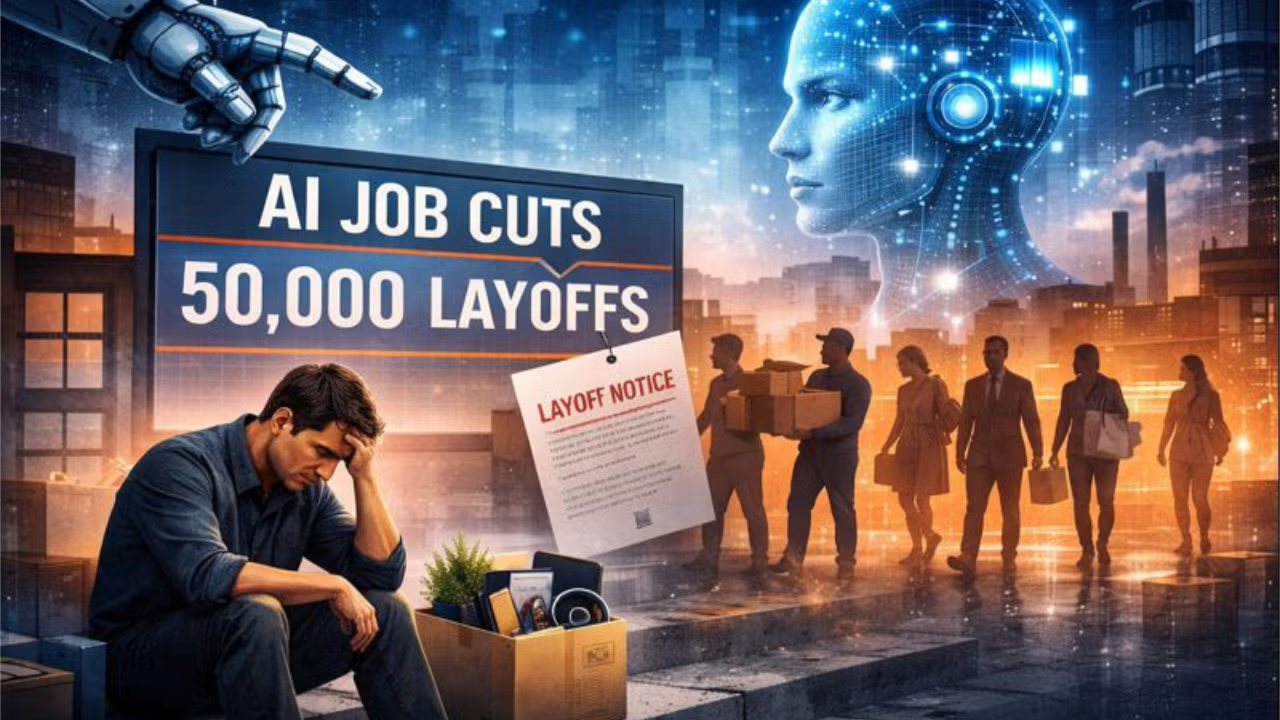
AI was responsible for almost 55,000 layoffs in 2025 alone. When a retail chain downsizes, it is unfortunate, but when an AI company quietly lays off hundreds while publicly promoting productivity gains from its own tools, it becomes a story about hypocrisy.
The examples from the last two years are instructive. Microsoft cut more than 15,000 jobs through 2025, even as CEO Satya Nadella confirmed that AI tools like GitHub Copilot were writing up to 30% of the company’s new code.
Here’s the optics: Growing revenue and shrinking headcount invited hard questions about whether the human cost of AI was adequately acknowledged. Workday, a workforce management software company cut 8.5% of its staff, with CEO Carl Eschenbach framing it as a pivot to AI investment. This message landed awkwardly given that Workday’s entire product exists to manage ‘people’ operations. And then there is Klarna, which has become the defining cautionary tale of the AI era.
In 2024, Klarna announced that AI had effectively replaced approximately 700 customer service agents, with the CEO publicly claiming that AI was performing at human-equivalent quality. By early 2026, Klarna was quietly reversing course. Customer satisfaction data had deteriorated on complex service interactions and the company began rehiring staff to handle interactions AI could not manage well. The story that was supposed to demonstrate AI’s workforce superiority became one of the clearest illustrations of what happens when companies over-promise and under deliver both in operations and communications.
The difference between a reputational hit and a reputational crisis often comes down to one thing: how leadership communicated before, during, and after the decision.
The most common mistake companies make is letting external messaging leak before employees hear the news directly. This destroys trust faster than the layoffs themselves.
Sequence matters enormously. Affected employees must hear from leadership before any press release goes live, before any media briefing happens, and before any all-hands meeting gets scheduled. Managers should receive talking points at least 24 hours in advance so they can field questions from their teams with confidence rather than confusion.
Meta’s 2022 layoffs, which affected 11,000 people, drew widespread criticism not just for their scale but for the impersonal execution. Employees found out their access was revoked before they received formal communication. That sequencing failure amplified the story for weeks. Contrast that with Airbnb’s 2020 pandemic-era reduction, where Brian Chesky’s letter to employees was widely praised for its directness, empathy, and specificity. He named what was happening, explained why, and detailed exactly what the company would do to support departing employees. That letter became a benchmark in crisis communications.
Leaders frequently ask, “What should I actually say when communicating layoffs? How do I avoid sounding corporate?” The answer is simple. Say the real thing.
Avoid language like rightsizing, workforce optimization, or strategic restructuring. These phrases signal evasion. Audiences including employees, media, and investors read through them immediately, and they produce exactly the cynical coverage companies are trying to avoid. Instead, use plain language. Name the number of people affected, explain the business reason clearly, and describe the specific support the company is providing like severance, job placement, extended healthcare, reference letters. Specificity signals accountability. Vagueness signals cover-up.
Amazon CEO Andy Jassy warned employees directly that AI will shrink the company’s workforce and that they will need fewer people doing some of the jobs that are being done today, and more people doing other types of jobs. That level of directness, while uncomfortable, at least gave employees something honest to process. It did not obscure the connection between AI investment and headcount reduction.
If AI tools contributed to the decision, just say so and explain what the company is doing to help affected employees transition. This is not just ethical but strategically sound. Companies that acknowledge the role of automation in workforce changes and pair that acknowledgment with meaningful support programmes build more durable credibility than those that obscure the connection.
Often, companies go into a silent period during layoffs, leading to more interest among the media that leads to more negative coverage. Proactive media management is one of the most underused tools in workforce communications. Identify two or three journalists who cover the AI sector seriously and brief them off the record 24 to 48 hours before the announcement. Give them context, data, and access to a senior spokesperson.
This approach gives journalists the ability to write informed, contextual stories rather than reactive ones. It reduces the likelihood of a single damaging angle dominating coverage. And it positions leadership as transparent rather than defensive.
What it does not do is guarantee positive coverage, nor should it. Journalists are not PR assets. But a well-briefed journalist is far more likely to include company context, support measures, and leadership rationale in their piece than one who receives a press release at the same time as the rest of the world.
Workforce announcements move on LinkedIn and X within hours. Former employees share personal accounts, current employees post coded messages and journalists screenshot internal memos.
Companies that try to control this narrative lose. Companies that get ahead of it by being honest, moving fast, and having senior voices speak publicly, shape it.
Designate a senior spokesperson to post on LinkedIn the day of the announcement. Keep the message aligned with internal communications. Respond to factual inaccuracies directly and quickly. Do not respond to every opinion, but respond only to misinformation. Monitor for employee sentiment, not to suppress it, but to identify where the communication failed so you can address it directly.
AI company leaders navigating workforce changes for the first time often ask, “Do I need an external PR agency for this, or can we manage it internally?”
The honest answer is that the highest-stakes communications moments are precisely when internal teams are most stretched and most close to the problem. An external agency brings objective distance, crisis communications experience, and media relationships that most in-house teams cannot replicate under pressure.
Star Squared PR specialises in exactly this intersection of technology, reputation, and high-stakes communications. Our teams understand the specific scrutiny AI companies face, the speed at which narratives form in this sector, and how to build communications strategies that protect reputation while maintaining authenticity. When the story is this loaded, having a specialist partner is not a luxury but a liability management decision.
Workforce changes in AI companies will continue. The companies that communicate with them with clarity, sequencing discipline, and genuine accountability will survive the news cycle and build the kind of trust that becomes a competitive advantage. Those that evade, obscure, or get the sequencing wrong will hand their critics a story that writes itself.