

What Indian journalists really want from AI companies in 2026
19 Feb 2026, Theja Ram


19 Feb 2026, Theja Ram


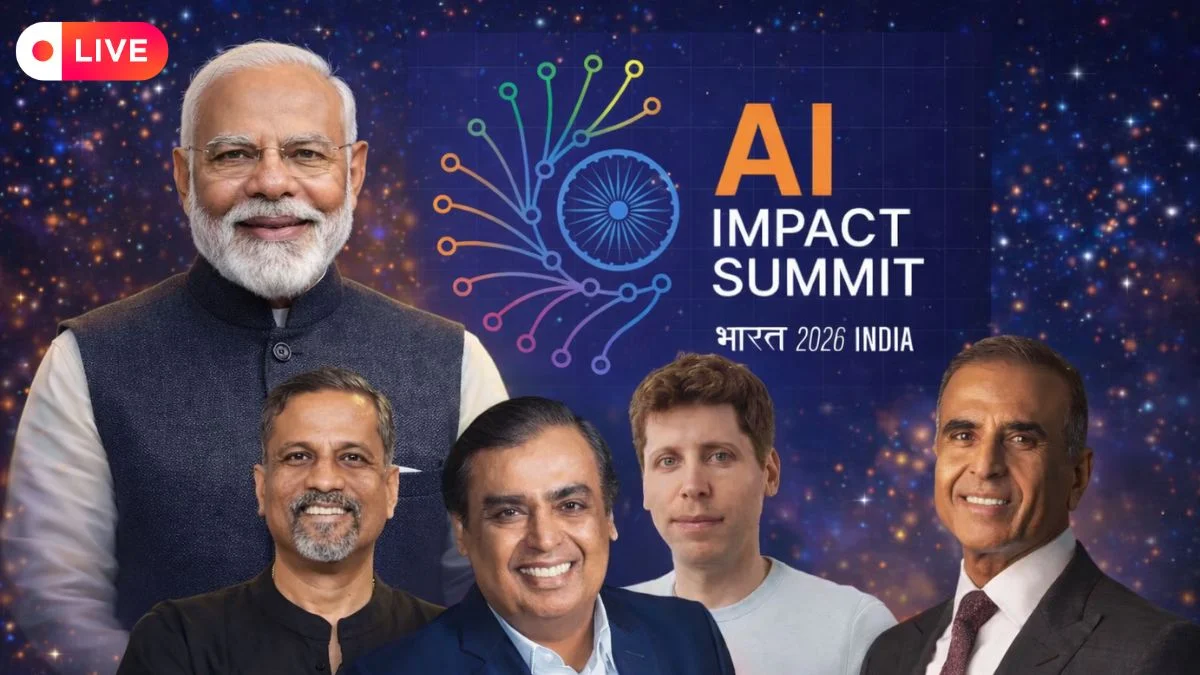
Having spent the better half of my career in Indian newsrooms filing stories, editing late into the night and sifting through endless pitches, I now advise AI companies on how to communicate their AI PR Strategy effectively to journalists. The shift from one side of the desk to the other has offered me a clear perspective of what’s changed, and this is more pronounced after the India AI Impact Summit 2026.
I spent the last few days speaking with old colleagues about how they’d like to cover news about AI. Their sentiment wasn’t anti-technology. In fact, they’re already using AI sandwiches, where journalistic intent, AI assistance, and human edits are coming together in newsrooms themselves. The real problem, as one journalist said, “It’s AI spam in my inbox. The same old story angles with no new, human-centric ideas. That’s been my biggest issue.”
If you’re an AI founder or a PR professional still sending pitches that read like ChatGPT wrote it, you’re not just losing coverage; you’re losing your license to operate in the Indian media landscape.
Journalists are living through the Inbox Apocalypse. Newsrooms are shrinking, reporters are covering three beats instead of one, and their emails are exploding with AI-generated spray-and-pray pitches. The problem is a single reporter is receiving hundreds of near-identical emails every week. They are tired, and their instant-delete reflex is triggered almost daily. There are three reasons why:
First, there are way too many AI enterprises and startups claiming to be the ‘first’ or ‘revolutionary’ or paradigm-shifting’. As one business journalist told me, “This sounds like investor deck fluff. Who are they kidding?” What journalists really want is proof, not hyperbole. A pitch about a new feature feels like a press release from the past. They don’t care if your AI can code. They care if AI helped small businesses in India in tier-2 and tier-3 cities become 40% more profitable. They care if AI helped 5 lakh farmers improve their income levels.
Second is the polished sameness of every pitch. AI-generated slop pitches that are linguistically perfect but emotionally vacant mean nothing to journalists who really want to tell human-centric stories. They are deleting ultra-nationalistic pitches piggybacking on Make in India and AI-generated generic story angles. That’s because they want to know that the pitch was written after considerable research on what stories they’ve covered and whether the pitch topic matches their area of interest. More importantly, they care if the story angles make sense to their readers and they want you to already know what stories they hate covering.
“I’ve been a journalist for close to 15 years and not once have I received a pitch where the PR person tells me how the pitch is relevant to my reader. I’ve wondered if they even research who my readers are and what matters to them. Most PR people don’t even know the type of stories I hate covering. It’s disappointing and patronising,” a senior tech journalist told me a day after the summit.
Third, journalists are tired of ‘digital imperialism’ and the lack of transparency. At the recent India AI Impact Summit, Kalli Purie of India Today Group outlined a shift in sentiment that PR professionals must respect. Journalists see themselves as the human moat against a flood of synthetic content. They want authenticity. They want to know the impact of your AI company on 1.4 billion people in the country. They don’t want to hear that an AI company is simply compliant with data protection laws. In 2026, if your AI company can’t explain training data provenance, a journalist won’t touch it.
What Indian newsrooms actually expect in 2026
As an AI founder or a PR professional who wants to pass muster with journalists, you have to stop leading with narratives that are ‘safe to use’ and start enabling journalism. Here’s what works now:
#1 Be hyper relevant and brief. Your narrative has got to be under 150 words. If you haven’t referenced the journalist’s last two articles by name in the first two lines and the story hook in the third, don’t push the send button. Being relevant isn’t about aligning with government initiatives anymore. Indian journalists are hungry for stories about AI’s impact outside of metro cities. If your tech is helping a farmer in Vidarbha or a weaver in Kanchipuram, that’s your lead. Journalists are running media pitches under AI scanners. If your narrative or pitch is AI generated, consider yourself benched for a good long while. Yes, use AI to scan a reporter’s last few articles and story patterns, but the final email should carry real voice because personal insight and even a touch of vulnerability signal credibility.
#2 No more boring ROI pitches. Journalists are tired of hearing your AI product is magical. Remember that efficiency is a commodity. Claiming AI saves time and improves productivity in 2026 is like saying email is fast in 2010. Show them how it dropped the inference cost for a bunch of kirana stores in Kanpur from ₹100 to ₹1.2. Frugal AI at population scale is what they care about now.
#3 Be radically transparent. Journalists want to know an AI company’s training data provenance. Are you licensing it fairly? Are you mandating output labelling? If you aren’t following the responsible reciprocity model, journalists view you as a part of the problem, so your narrative is going straight to the spam folder. Instead of asking to be mentioned in a story piggybacking on DPDP laws, offer data. “We analyzed 1 million Indian language queries and found a 200% spike in financial literacy,” is far more likely to resonate with a journalist than a pitch based on a story that’s two days old.
#4 Know that an anti-AI pitch is the next big headline. Journalists want human-centric stories about AI. Showing the humans behind the algorithms, their mistakes, ethics, and vision. This builds trust that AI-generated content cannot. Lead with the humans. Instead of “Bengaluru-based startup launches India’s first-of-its-kind AI tool”, pivot to, “Meet the 5-person team in Bengaluru who built a model that speaks 22 Indian languages better than ChatGPT 5”.
The winners who earned media coverage in 2026 won’t be the companies with the biggest GPUs. They’ll be the ones with the most trust equity. Clarity and reciprocity are the only currencies that compound and make you truly visible in the Indian media landscape. If you treat journalists as partners in explaining your AI technology to a billion people instead of treating them as a megaphone, you won’t get a mention.
Is your current AI PR strategy still living in 2023? At Star Squared PR, we’d love to help you audit your narrative and strategise your next winning PR plan that actually breaks through the noise. What’s your biggest hurdle right now? Reach out to us and let’s figure it out together.