

How to get your brand cited by Claude, ChatGPT, Gemini and AI search
19 Aug 2026, Theja Ram


19 Aug 2026, Theja Ram


Getting a brand cited by ChatGPT, Gemini, Cluade and Google’s AI Overviews depends on three conditions. AI citation happenswhen a brand appears across credible third-party sources, its own pages are technically retrievable and clearly structured and the information in those pages is specific enough for a model to lift and attribute.
Generative engines read the web, select a small number of sources, and compose an answer from them. Brands that show up often in trusted places, and that publish clear, evidence-backed content are the ones AI search results tend to name.
“I want my company to show up on ChatGPT’s list when someone asks,” is now the most-requested and sought-after outcome these days. It’s also the question burning a hole in every PR professional’s brain. Everyone seems to have vague answers but nothing concrete. This is a guide that explains how AI systems choose sources, how that differs from ranking on Google, and what a brand can do to become one of the sources an AI cites.
Most AI answer engines work through retrieval augmented generation or RAG. Instead of relying on what the model learned during training, the system fetches live sources from the web and grounds its response in what it retrieves. Understanding this pipeline explains why some brands get named and others do not.
This process runs in stages. Here’s what that entails:
These patterns favour brands that are present, current, and referenced by others. That is a reputation problem as much as it is a technical one. Technical work makes a brand eligible for retrieval. It is necessary and quickly exhausted. How do businesses do this?
Once these are in place, further technical tuning offers little return. The remaining gains come from PR.
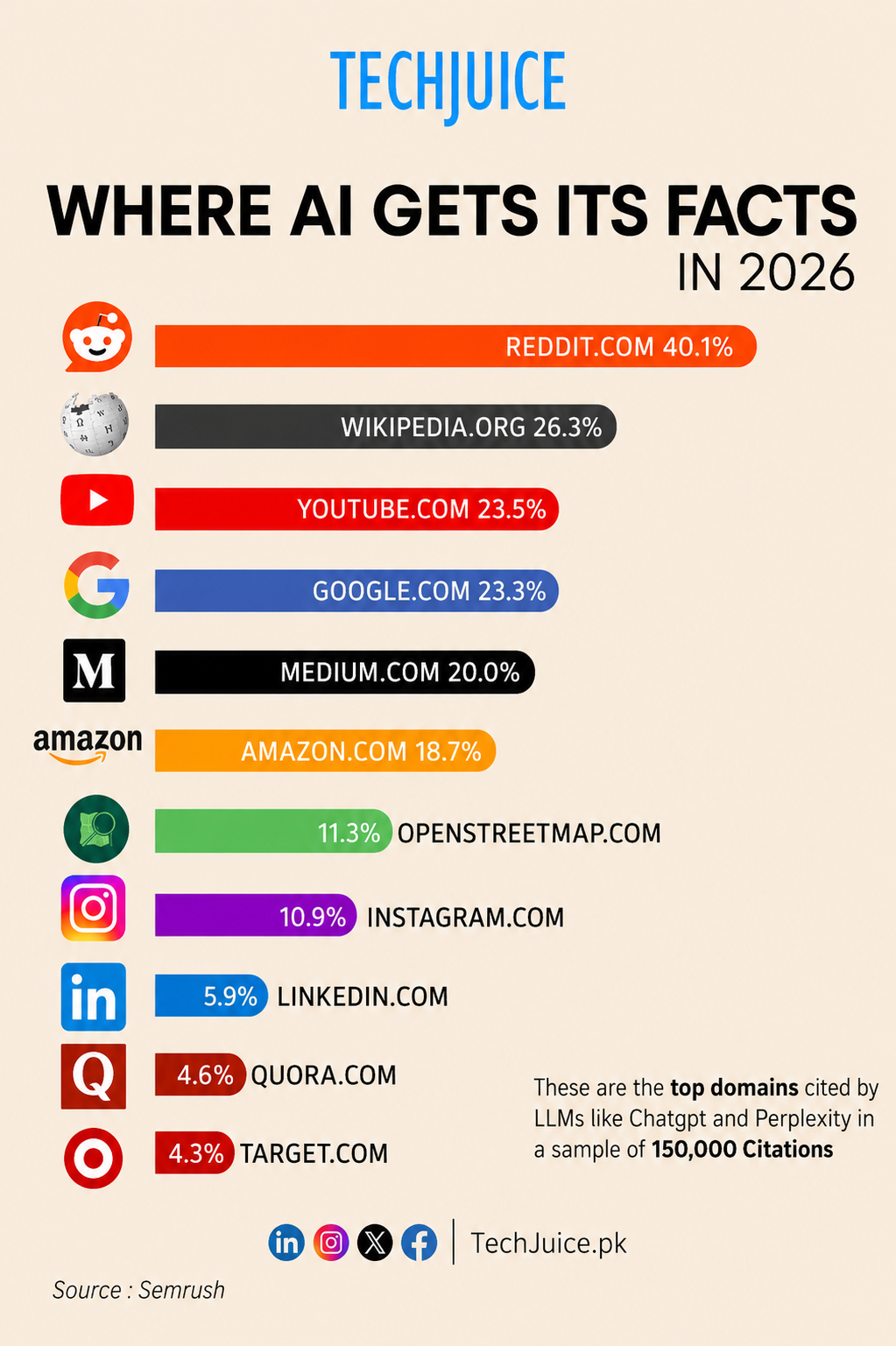
Reddit is the single most-cited domain across ChatGPT, Gemini, Perplexity, and Google AI Overviews in 2026. Studies place it at roughly 40% of aggregate citations across engines, as high as 46.7% of Perplexity’s cited sources in some categories, and around 21% of Google AI Overviews’ citations. Research reveals that domains with large volumes of Reddit brand mentions earned about 3.9X more ChatGPT citations than domains with minimal presence.
AI engines treat Reddit threads as authentic, experience-based discussion, which is the content these systems are tuned to surface.
For PR professionals, this reframes Reddit as a new outreach channel, resembling media relations. A practitioner identifies the communities that shape opinion in a category, learns their norms, earns standing through genuine contribution, and secures mentions the community validates through upvotes and replies. Moderators and respected members act as the new gatekeepers, comparable to editors and beat reporters. The monitoring tools that once tracked press coverage now need to track community threads and the AI answers that quote them.
What this looks like in practice:
The same logic extends to the other community sources engines favour, including Stack Exchange for technical categories, YouTube for demonstrations, and LinkedIn for company presence.
When a buyer asks an AI for the best options in a category, the engine assembles its answer from third-party listicles, comparison articles, and review platforms rather than from any vendor’s own site. Securing a place on those pages is digital PR and analyst relations are now important. Here’s how it works:
AI engines and the journalists they cite reward specific, attributable data. A single original statistic travels further than a dozen opinion pieces, because every outlet that repeats it strengthens the association between the brand and the topic. This is data-led PR built for the AI citation era.
AI answers about who leads or understands a category drawn on bylined articles and expert quotes in established outlets. Because brand authority is the strongest predictor of citation, sustained media presence is the most durable investment a brand can make.
Freshness raises citation rates, which gives newsjacking a direct role in GEO. Timely expert reaction to a development in your category produces recent, relevant coverage that AI engines favour, and it does so through the reactive media relations PR teams already run. Build a light process for spotting relevant news and getting a credible voice into the coverage within a day.
The tactics above point to a broader change in how PR works in the future. Community relations is becoming a core PR competence rather than a marketing afterthought. Review platforms and analyst listings join the target outreach list alongside journalists.
Measurement expands from coverage volume toward share of AI answers, tracking how often each engine names the brand and against which competitors.
PR and SEO teams that once worked separately now share an objective, since the earned signals PR produces and the technical eligibility SEO provides both feed the same citation.
Track how often each engine names your brand for the questions that matter in your category, your share of AI citations against competitors, and which sources the engines rely on when they respond. Because cited brands attract further citations, early visibility compounds, which makes consistent measurement worth the effort.
Star Squared PR is a B2B public relations agency based in Bengaluru, working with technology, AI, and deep tech companies since 2016. Almost every lever that earns an AI citation is earned media and reputation work, which is the core of what the agency does. Getting a brand discussed in the right communities, quoted in the right publications, included in the roundups buyers read, and known for data worth citing is how third-party authority gets built, and that authority is what generative engines weigh most heavily.
For companies that want to be named when a prospect asks an AI which vendors lead their category, Star Squared PR can audit current AI visibility, run the community and media outreach behind it, and track how often each engine cites the brand over time. Our approach to building a PR moat for AI visibility explores how this works in practice.
Get in touch with us to discuss a GEO and earned media programme.
Reddit is the single most-cited domain across ChatGPT, Gemini, Perplexity, and Google AI Overviews in 2026, followed by Wikipedia and YouTube. Genuine presence in the communities that discuss your category is one of the highest-leverage moves available.
Both, working together. SEO and technical setup make a brand eligible for retrieval, while PR earns the community presence, media coverage, and authority that decide which eligible sources actually get cited.
Yes. The engines overlap on only a small share of cited sources, so a single approach applied to all of them underperforms a plan weighted toward the sources each engine favours.
Timelines vary with a brand’s existing authority. Because cited brands attract further citations, brands with established media presence tend to gain visibility faster, while newer brands build it as third-party references accumulate.